Arnold, MO · Garage Door Service
Buying a Replacement Door Here: What Arnold's Housing Stock Actually Means
Arnold's garage doors mostly date to the 1960s-70s building boom. Here's what that means for sizing, insulation, and cold-weather performance when you replace one.
- Repairs & new doors
- Springs & openers
- Serving 5 nearby communities
The Situation
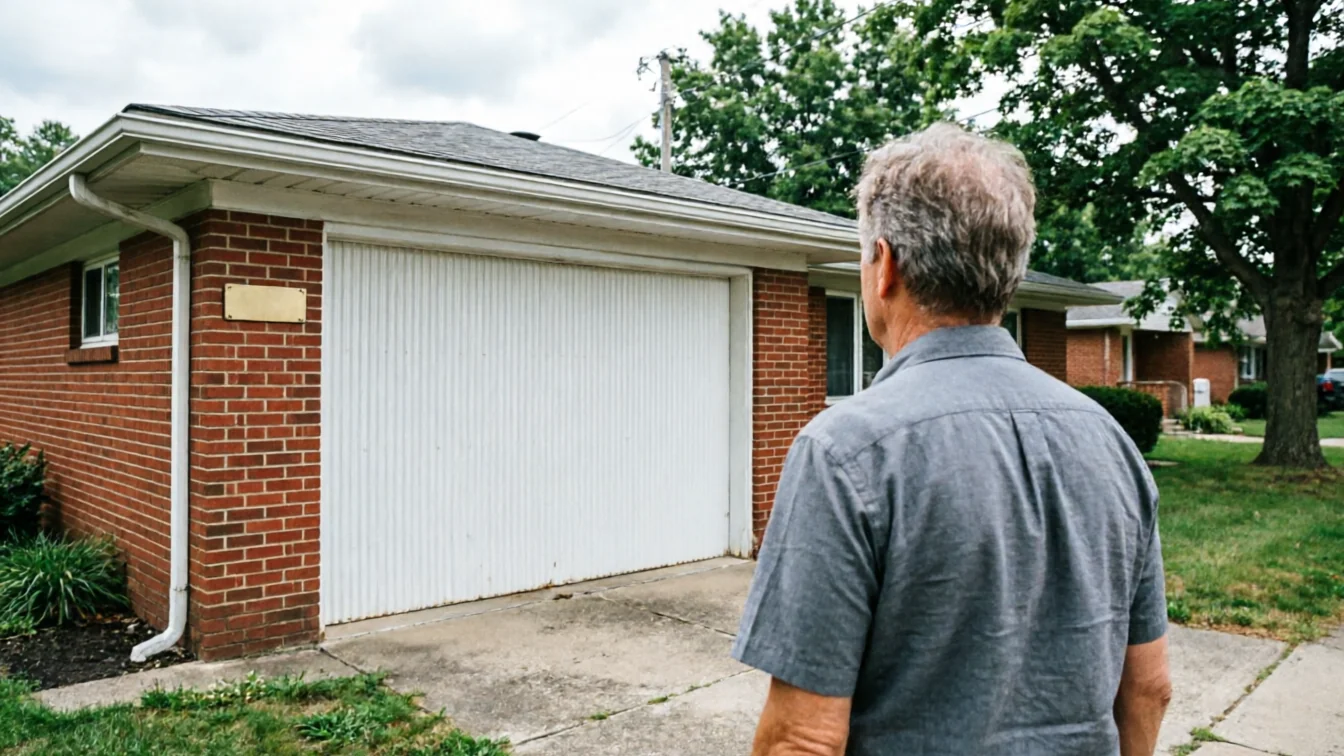
Most of the housing in and around Arnold went up between 1947 and 2001, with the bulk of it clustered in the 1960s and 70s across the 39 named areas that make up this part of Jefferson County. That matters more than people think when it comes time to replace a garage door. A house built in 1968 wasn't built to a modern energy code, and the garage opening on it is often a non-standard size compared to what a big-box store stocks off the shelf - a 16x7 that's really 15'10", or framing that's shifted a half-inch over fifty-some years of settling.
We see a steady mix of old steel sectional doors, a handful of surviving wood doors from the original build, and doors that got swapped once already in the 90s or 2000s by a previous owner. None of that is a problem on its own. It becomes a problem when a homeowner orders a door online sized for a "standard" opening and it doesn't fit the track hardware already bolted into a 1970s frame. Measuring the actual rough opening before ordering anything is the step people skip, and it's the one that costs the most to fix after the fact.
The Common Mistake
The mistake we see most is buying a replacement door based on curb appeal photos instead of what's behind the wall. A door that looks right in a catalog can have the wrong track radius for a low-headroom garage, which is common in houses from this era that weren't built with today's taller openers in mind. Another version of the same mistake: buying an insulated door without checking whether the springs and opener on hand can handle the added weight. An R-value upgrade on a 50-year-old house is worth it, but only if the hardware underneath gets upgraded with it.
People also assume a new door means a new look has to match the whole street. It doesn't. With housing this age, garages were built utilitarian first - the door is functional infrastructure, not a design statement, and most owners are better served picking a door that fits the opening correctly and insulates well than one that chases a style trend. We'd rather talk you out of a door that won't fit than sell you one that does.
How Local Conditions Play In
This area sits in a cold-moderate climate band, which means winter matters for a garage door decision in a way it wouldn't somewhere milder. An uninsulated steel door on a house from the 1960s-70s stock is going to transfer cold straight into an attached garage, and if that garage shares a wall with living space - common in houses this age - that cold moves into the house. Weatherstripping and bottom seals wear out faster here than in a warmer climate because they go through more freeze-thaw cycling each winter.
With a median household income of $87,663 across this service area, most of the replacement jobs we see aren't bargain-bin decisions - people are willing to pay for an insulated door that actually holds up through a Missouri winter rather than the cheapest option at a warehouse store. That's the right call for this climate. A single-layer door with no thermal break is going to need weatherstripping replaced on a tighter cycle, and in a cold-moderate zone that's a maintenance cost that adds up over a few winters.
When Waiting Is Fine
Not every door on a 1960s or 70s house needs replacing just because it's old. If the panels aren't dented, the door still seals reasonably well at the bottom, and the springs and rollers are in working order, a tune-up and new weatherstripping can buy a few more years before a full replacement makes sense. We won't tell you to replace a door that's got life left in it just because the house itself is pushing fifty or sixty years old - age of the house and condition of the door are two different questions.
Where it stops making sense to wait: once a door's insulation has failed and the garage shares a wall with living space, or once the track and hardware are worn enough that parts availability becomes the real issue, not the door's appearance. On houses built in the 1947-2001 range, original hardware sometimes uses dimensions that current stock doesn't match exactly, and waiting too long on those repairs can turn a simple fix into a full teardown.
Frequently asked questions
Will a new garage door fit my opening if my house was built in the 1960s or 70s?
Usually, but it needs to be measured, not assumed. Openings from this era can run a half-inch or more off modern standard sizing after decades of settling, and track hardware from the original build sometimes doesn't match current stock. We measure the actual rough opening before ordering anything.
Is an insulated door worth it in this climate?
In a cold-moderate climate band like this one, yes, especially if your garage shares a wall with living space. An insulated door cuts down on cold transfer and the seals hold up better through repeated winter freeze-thaw cycles than a cheap uninsulated panel door.
Do I need to replace my door just because my house is old?
No. House age and door condition are separate questions. If the panels are solid, the seal is decent, and the springs and rollers work, a tune-up can extend the door's life well past the house's original build date.
Related garage door services in Arnold
More garage door guides
Book garage door service in Arnold
Call now or request a quote - tell us what the door is doing and where you are.