Arnold, MO · Garage Door Service
Why Weather Seals and Drafts Matter on Arnold Garage Doors
A look at why weather seals and drafts show up so often on Arnold garage doors, tied to the area's 1947-2001 housing stock and cold-moderate climate swings.
- Repairs & new doors
- Springs & openers
- Serving 5 nearby communities
The Situation
Walk the service area around Arnold and you're mostly looking at houses built between 1947 and 2001, with the median landing around 1975. That stretch covers a lot of the thirty-nine named areas we cover, from Imperial and Concord close in to places like Crestwood and Glendale further out. A door installed anywhere in that window was built to a different standard than what's sold today - thinner bottom seal tracks, narrower astragal channels, steel frames that were never meant to flex much.
Drafts around the bottom seal or along the side jambs aren't random. On a house from the 1960s or 70s, the seal channel is often the original one, just with decades of replacement vinyl pressed into a groove it was never widened for. The vinyl ages out faster than the metal it sits in, and once it starts to shrink, the gap shows up as a cold line of air along the floor or a whistle on windy days. It's not a sign the door is failing. It's a sign the seal has outlived its spec.
The Common Mistake
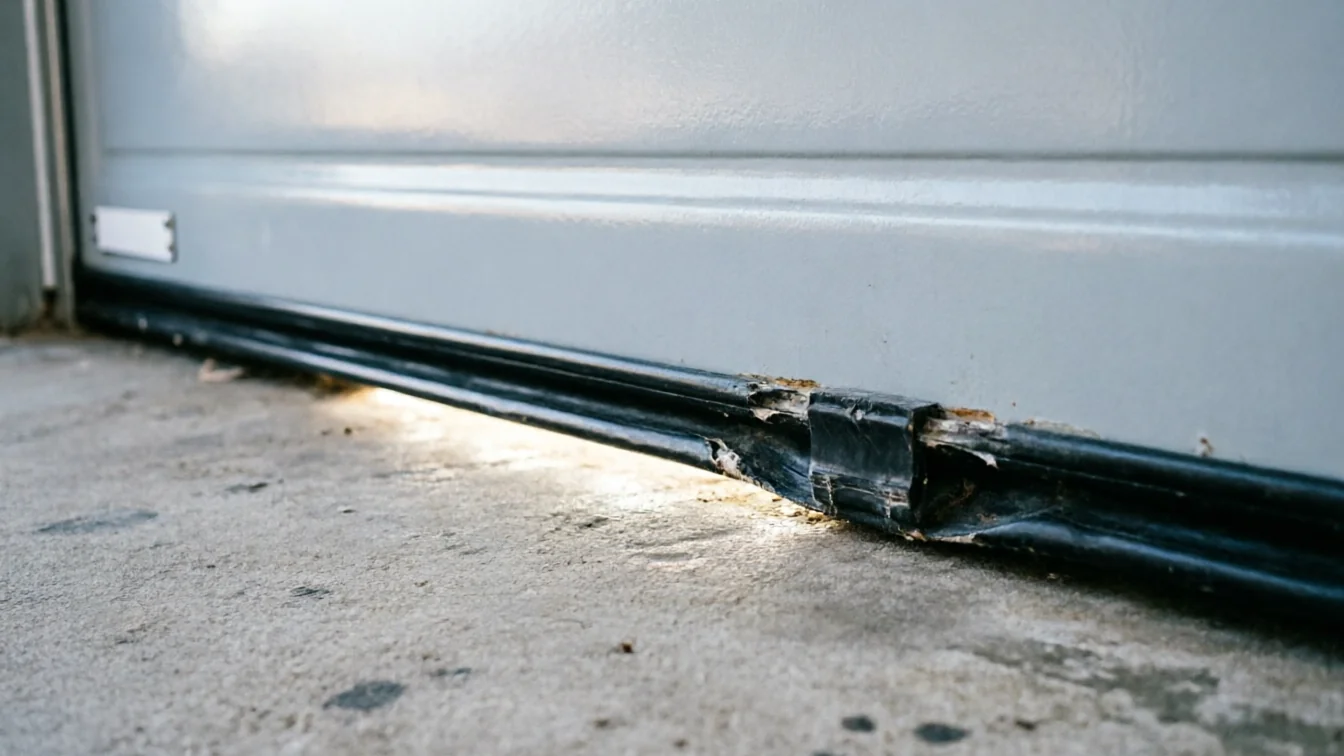
The usual fix people try is buying a roll of bottom seal from a hardware store and pressing it into the existing track without checking whether the track itself has widened or corroded. On a house from the 1947-2001 build window, that track has had forty to seventy years to pick up rust, bowing, or old caulk buildup, and a new seal pushed into a track that's out of true just gets chewed up again within a season.
The other common miss is treating every draft as a seal problem. Sometimes the gap is coming from a warped panel, not the seal at all, and no amount of weatherstripping fixes a bowed steel panel. We'd rather tell a homeowner the seal isn't the problem than sell a seal that won't hold.
How Local Conditions Play In
This area sits in a cold-moderate climate band, which means the seals here go through real freeze-thaw cycling rather than either a hard winter or a mild one year-round. Vinyl bottom seals contract when temperatures drop and expand again on the warm swing, and that repeated cycling is what cracks a seal faster than straight cold ever would.
On the older end of the local stock - the 1960s and 70s builds that make up most of what's around Arnold - the original seal retainer track is usually aluminum or light steel, and after enough freeze-thaw seasons it loses the slight flex that kept the seal gripped. That's why a seal that looked fine in October can be whistling by February even though nothing about the door itself changed. The track moved before the seal did.
When Waiting Is Fine
Not every draft needs an immediate call. If the air is only coming through at the very bottom corners and the door still closes flush, that's a seal nearing the end of its life, not an emergency - it'll hold through another season if you have to wait on a part or a schedule.
Where we'd tell you to stop waiting is if the draft runs the full width of the door or you can see daylight along a side jamb. At that point it's usually not the seal anymore, it's the track or the panel underneath it, and a seal swap won't touch that. One honest limit here: if the panel itself is warped from age, a new seal is a patch, not a fix, and we'll say so rather than sell you a bottom seal that's covering up a bigger problem.
Frequently asked questions
Why does my garage door whistle on windy days?
On houses built in the 1947-2001 window common around Arnold, the bottom seal track often predates today's thicker vinyl seals. As the old track widens slightly or the seal shrinks with freeze-thaw cycling, air finds the gap and you hear it as a whistle, especially on a door facing into the wind.
Will a new bottom seal fix a cold draft along the floor?
Usually, if the seal is the actual problem. If the track underneath has rusted or bowed, which happens on a lot of the 1960s-70s stock in this area, a new seal alone won't seal the gap - the track needs attention first.
How often should I replace garage door weather seals here?
We don't have a fixed interval from the data we have, but the cold-moderate freeze-thaw cycling in this area tends to crack vinyl seals faster than a milder climate would, so check them each fall rather than waiting for a visible gap.
Related garage door services in Arnold
More garage door guides
Book garage door service in Arnold
Call now or request a quote - tell us what the door is doing and where you are.