Arnold, MO · Garage Door Service
What We Look for First on a Garage Door Call in Arnold
Arnold's houses mostly date to the 1960s-70s, built between 1947 and 2001, and that age is exactly what shapes a service call here before the cold weather test even starts.
- Repairs & new doors
- Springs & openers
- Serving 5 nearby communities
The Situation
Most homes in Arnold went up between 1947 and 2001, with the bulk of the stock dating to the 1960s and 70s, which means the garage doors and openers a technician meets are often original to houses built in that window. That's not a guess - it's what the housing numbers for this area show, and it's what we find when we pull into a driveway. A door from that build run was likely installed with a single torsion spring, a non-insulated steel or wood panel, and hardware sized for a lighter door than what's common today. So before a technician asks what the opener is doing, they're looking at the door itself: panel material, spring count, track gauge. None of that is universal - a 1998 build and a 1962 build on the same street can have completely different spring setups, and guessing wrong means a spring that's either underpowered or dangerously over-wound.
The Common Mistake
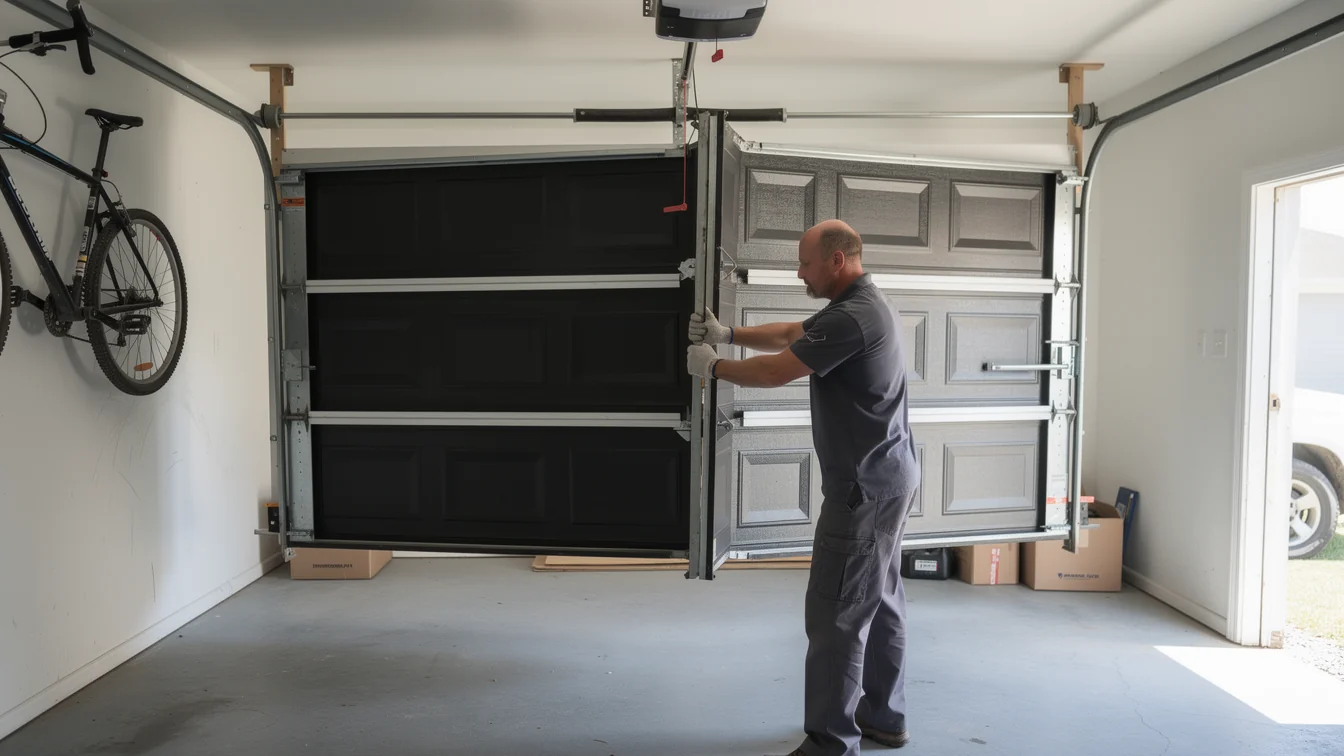
The mistake we see most is a homeowner (or a handyman) replacing a broken spring with whatever size is on the shelf, instead of matching it to the door's actual weight and age. On the older end of Arnold's stock - closer to that 1947 start - doors tend to be heavier solid wood, built before lighter composite panels were standard. Swap in a spring sized for a modern insulated steel door and the opener strains every cycle, which wears the gears fast and eventually burns out the motor. On the newer end of the range, closer to 2001, the opposite problem shows up: a spring sized for the old heavy doors on a lighter panel over-lifts and slams the door open. Either way, the fix isn't the spring - it's matching the spring to the specific door in front of you, which is why the first thing a technician does is measure and weigh, not swap.
How Local Conditions Play In
Arnold sits in a cold moderate climate band, which means winter cold is real but not extreme - enough to stiffen grease, shrink rubber seals, and make steel contract, without the deep-freeze swings that crack concrete floors outright. On a door that's original to a 1960s or 70s build, fifty-plus winters of that freeze-thaw cycle have usually done one of two things: hardened the torsion spring's temper so it loses lift capacity, or dried out the weather seal at the bottom panel so cold air and moisture get under the door. A technician checks both before touching the opener, because an opener struggling to lift a door isn't always an opener problem - it's often a spring that's lost tension from decades of seasonal cycling. With 74,917 owner-occupied houses across this service area, most built before double-wall insulated doors were standard, a tech starts at the weather seal and hinge pattern rather than the control board, because that's where this climate and this housing age actually meet.
When Waiting Is Fine
Not every noise means a truck needs to come out. If a door that's decades old has always had a little rattle in the top panel and nothing's changed, that's wear, not failure, and it's fine to let it ride until something else needs attention. We also won't pretend every older door is worth saving - if the panel is original from the 1947-2001 build window and the spring, rollers, and opener all need work at once, replacement is usually the honest call over a string of repairs on hardware that old. What we won't do is tell you a door is fine over the phone without seeing it; a spring that sounds minor on a call can be one cycle from snapping. If you're not sure which situation you're in, that's a quick look, not a guess.
Frequently asked questions
Why does the age of my house matter for a garage door repair?
Because most houses in Arnold were built between 1947 and 2001, with the bulk from the 1960s-70s, your door's spring size, panel weight, and track hardware are often tied to construction standards from that decade. A technician checks the door's age and build before touching the opener, since a mismatched spring is the most common cause of premature failure.
Does cold weather really affect an older garage door here?
Yes. Arnold sits in a cold moderate climate band, and decades of freeze-thaw cycling stiffen torsion springs and dry out rubber weather seals. On a door original to a 1960s or 70s build, that's often what's behind a door that suddenly struggles to lift, even before the opener is checked.
Is it ever okay to wait on a garage door repair?
Sometimes. A long-standing minor rattle in an older panel usually isn't urgent. But a spring that sounds off, especially on a door original to the 1947-2001 build range, should get looked at soon - it can go from a minor noise to a full failure in one cycle.
Related garage door services in Arnold
More garage door guides
Book garage door service in Arnold
Call now or request a quote - tell us what the door is doing and where you are.