Arnold, MO · Garage Door Service
Is Your Old Arnold Garage Door Worth Fixing?
Arnold homes mostly date 1947-2001. See when a repair still makes sense on that era of door, and when the cold-climate wear means it's time to replace.
- Repairs & new doors
- Springs & openers
- Serving 5 nearby communities
The Situation
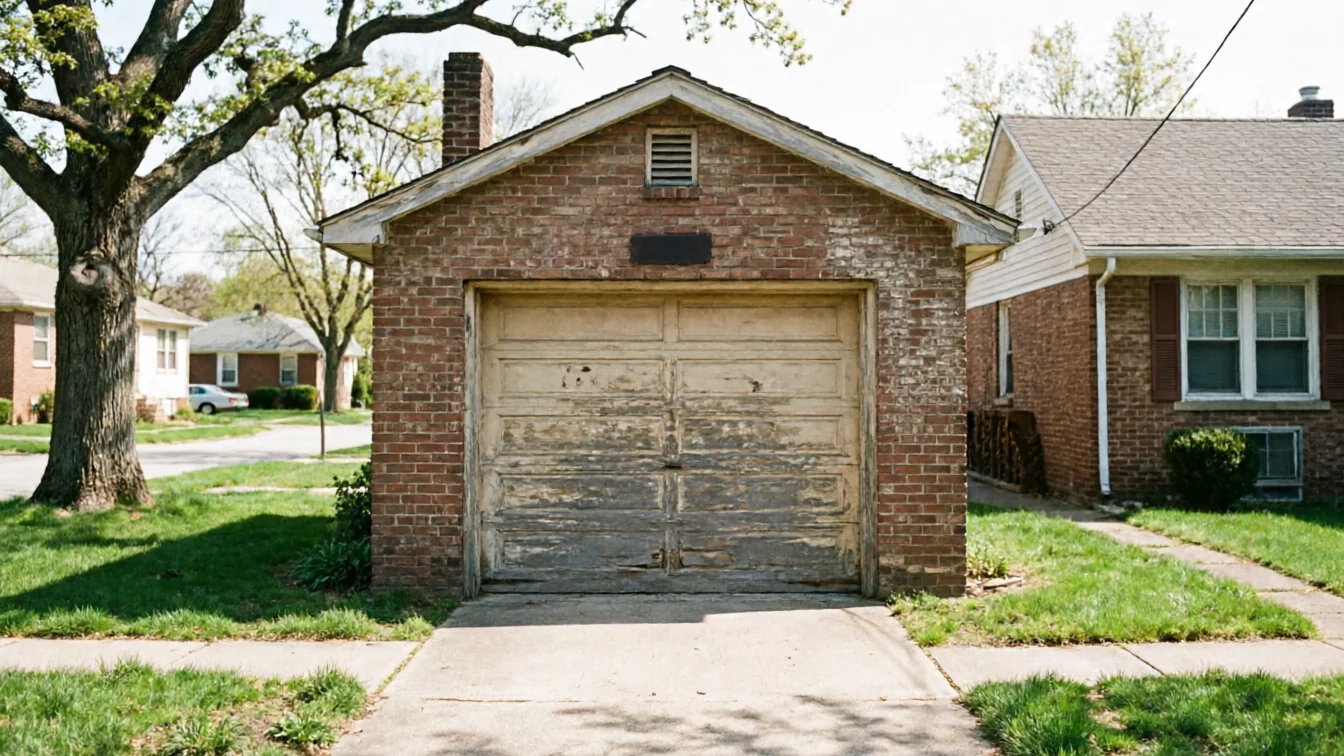
Most houses around Arnold went up between 1947 and 2001, with the bulk of that stock built in the 1960s and 70s across the area's older subdivisions. That means a lot of the doors we get called on aren't failing because of bad luck - they're failing because the door, the track, or the opener is 40 to 60 years old and has done its job for decades. A door from that era was built differently than what's sold today: heavier steel, simpler hardware, sometimes a single torsion spring doing work that a modern double door splits across two. When a homeowner calls about a door that "just stopped working," the first question isn't what's broken - it's how old the system is and whether the rest of it is still sound enough to be worth fixing around. A cracked panel on a door that's otherwise original and running smooth is a different call than a cracked panel on a door whose opener, track, and springs are all showing their age at once. We look at the whole system before we quote a repair, because replacing one part on a door that's about to need three more isn't doing anyone a favor.
The Common Mistake
The mistake we see most in homes from this era is patching the symptom instead of asking why that part failed on a door this old. A homeowner replaces a snapped cable, and six months later the roller on the opposite track goes, because both parts were installed the same year and wore out on the same clock. On a door built in the 1960s or 70s, the hardware ages as a set. Fixing one piece without checking the rest just moves the next call a few months down the road. The other version of this mistake is the reverse - assuming a door this old automatically needs full replacement when actually the track and springs are fine and it's a single bent roller or a dead sensor. Age alone doesn't tell you what to do. What tells you is whether the panel steel is still straight, whether the spring has any life left in its coil count, and whether the opener's old enough that parts for it simply aren't sold anymore. We've opened up plenty of doors from the 1975 median build year that still had good bones under one broken part.
How Local Conditions Play In
Arnold sits in a moderate cold climate band, which matters more for garage doors than most people expect. Steel contracts in cold weather, and on a door that's 40-plus years old, that contraction finds every bit of existing wear - a spring that's lost a little tension, a track that's a few degrees out of plumb, weld points that have fatigued over decades of seasonal swings. None of that shows up in July. It shows up on the first cold morning when the door won't lift evenly or the opener strains and quits partway. This is why a repair call on an older Arnold door often turns up more than the one symptom that triggered the call - the cold just reveals what summer hid. It's also why we're cautious about small patch jobs on original-era doors going into winter: a cheap fix that holds in warm weather can fail outright once temperatures drop, and that's a worse outcome than spending a little more to do it right the first time.
When Waiting Is Fine
Not every noise or stiff spot on an older door means act now. If your door is from that 1960s-70s wave and it's still opening and closing on its own power, running quiet, and the spring looks intact, a little roughness in cold weather can often wait until it's convenient rather than urgent. We won't tell you to replace a door that's still doing its job just because of its birth year. Where we draw the line is safety and total failure - a spring that's visibly stretched or rusted through, a door that drops instead of lowering, an opener that reverses randomly. Those don't wait. Everything short of that, on a door that's otherwise sound, is a judgment call we're happy to walk through with you rather than push a bigger job than the house needs.
Frequently asked questions
My garage door is original to the house - should I just replace it?
Not necessarily. Plenty of doors from the 1960s-70s building wave are still structurally sound; it depends on the panel steel, spring condition, and whether opener parts are even available anymore. We check the whole system before recommending replacement over repair.
Why did my door suddenly act up in cold weather?
Steel contracts in the cold, and on an older door that wear was already there - it just takes a cold morning to show up as uneven lifting or an opener straining. It's common on original-era doors around Arnold during winter.
Is it ever not worth fixing an old door?
Yes - when the spring, track, and opener are all failing at once, which happens on doors from the same build era because the hardware ages together. At that point, patching one part just delays the next failure by months.
Related garage door services in Arnold
More garage door guides
Book garage door service in Arnold
Call now or request a quote - tell us what the door is doing and where you are.